

Best AI Smart Glasses in 2026: Features, Benefits, and Top Models Compared
By Rohan Khanna | Technology Content Writer
Summarize this blog post with: ChatGPT | Perplexity | Claude | Grok
A couple of years ago, “smart glasses” mostly meant clunky prototypes that nobody actually wore outside a tech conference. That’s changed fast. Walk through any airport or college campus now and you’ll spot people wearing what look like ordinary sunglasses that happen to take photos, answer questions, or translate a menu on the fly. AI smart glasses have quietly gone from a novelty to something a lot of regular people actually use every day — and 2026 is shaping up to be the year this category really hits its stride.
If you’re trying to figure out whether they’re worth buying, which model fits your needs, or even just what the difference is between “AI glasses” and “AR glasses,” this guide should clear things up. I’ll walk through how these devices work, what to actually look for, and how the major players stack up against each other.
Key Takeaways
- AI smart glasses combine cameras, microphones, speakers, and an AI assistant in a wearable frame, letting you get information, translations, and photos without reaching for your phone.
- The category falls into three rough types: audio-and-camera glasses (Ray-Ban Meta), AR display glasses (XREAL One, Rokid Max), and full XR/spatial computing glasses.
- Global shipments are projected to grow from ~6 million units in 2025 to nearly 20 million in 2026, with market value rising from $1.2B to $5.6B — Source: Memeburn Market Research, 2026.
- Battery life depends heavily on type: ~8 hours for audio-first glasses (up to 48 hrs with the case), 4-6 hours for camera-heavy use, and 3-4 hours of active screen time for most AR display models.
- Real-time translation, voice AI assistants, and camera quality are the features that matter most for everyday usability — not raw spec-sheet numbers.
- For most buyers, Ray-Ban Meta is the easiest, most well-rounded entry point; XREAL One or Rokid Max make more sense if you specifically want a portable AR display.
- Privacy has improved with standard recording indicator lights and more on-device processing, but it’s still worth checking permissions and local rules on camera-equipped wearables.
- AI glasses can’t fully replace smartphones yet — they handle quick interactions well but still depend on a paired phone for connectivity and heavier tasks.
What Exactly Are AI Smart Glasses?
At their core, AI smart glasses are wearable eyewear with a camera, microphones, speakers, and an AI assistant built into the frame. Instead of pulling your phone out of your pocket every time you need information, you just talk to your glasses — or in some cases, glance at a small display projected in front of your eye.
Think of it this way: your phone is still the brain doing most of the heavy lifting, but your glasses become the interface. Say “Hey Meta, what’s this plant?” while looking at something in your garden, and you’ll get an answer read back to you through tiny open-ear speakers. Or you’re standing in front of a menu in Lisbon that’s entirely in Portuguese, and the glasses translate it for you in near real-time.
Most current AI glasses fall into one of three rough categories:
- Audio-and-camera glasses with no visual display — Ray-Ban Meta is the obvious example here.
- AR display glasses that project a screen inside the lens — think XREAL One or Rokid Max.
- Full XR/spatial computing glasses built for more immersive, productivity-focused use.
Honestly, the distinction matters more than most marketing copy lets on, because it changes everything from battery life to how the glasses actually feel after a few hours of wear.
Why This Category Is Suddenly a Big Deal
It’s not just hype. The numbers back up what you’re seeing on the street. Global AI smart glasses shipments are projected to jump from around 6 million units in 2025 to nearly 20 million in 2026, with market value climbing from roughly $1.2 billion to $5.6 billion over the same period — Source: Memeburn Market Research, 2026.
What’s driving that growth? Mostly the fact that every major tech company has decided this is the next big interface war. Meta has had a head start with Ray-Ban, but Google showed off Android XR frames co-designed with Warby Parker and Gentle Monster at I/O 2026, and reporting suggests Apple is finally gearing up for its own smart glasses reveal. When three or four giants start competing for the same shelf space, prices tend to come down and features improve fast — which is good news if you’re shopping right now but also a reason not to panic-buy the first thing you see.
There’s also a clear regional signal worth noting if you’re shopping from India: Amazon India reported a 60% year-over-year increase in search demand for AI devices, including smart glasses — Source: Times of India, 2026. Ray-Ban Meta has responded with Hindi language support, localized AI voices, and UPI payment integration, which honestly makes a bigger practical difference for everyday use than another camera megapixel bump would.
What Should You Actually Look For?
I’ll be straight with you — most buying guides throw a wall of specs at you and call it a day. In practice, only a handful of things really determine whether you’ll keep wearing these or whether they end up in a drawer after two weeks.
1. The AI Assistant Itself
This is the part that matters most, and it’s also the part that’s hardest to judge from a spec sheet. A pair of glasses with a mediocre display but a genuinely useful, fast AI assistant will get worn daily. A pair with gorgeous optics but a clunky, laggy assistant gets left at home.
Ray-Ban Meta Gen 2 runs on Meta’s Llama-based AI, responding to “Hey Meta” for everything from messaging to live translation to describing what’s in front of you. Research on always-on AI glasses has found they can meaningfully cut down task completion time compared to reaching for a phone — Source: VisionClaw research, arXiv 2026. That tracks with what a lot of early adopters report: the value isn’t any single feature, it’s the cumulative time saved from not constantly unlocking a phone.
2. Real-Time Translation
If there’s one feature that converts skeptics, it’s translation. The mechanics are straightforward — onboard microphones capture speech, an AI model processes it, and the translated audio or text comes back through the speakers or display almost instantly.
For travelers, this is genuinely transformative. I’ve heard from people who used Ray-Ban Meta in Tokyo and Lisbon and said it changed how comfortable they felt navigating without a local SIM or constant phone-fumbling. It’s also useful in business settings — imagine sitting in a meeting where someone’s speaking a language you don’t know and getting a quiet translation in your ear without anyone noticing.
3. Camera Quality
If you create content or just like documenting trips, camera specs matter more. Look for at least 1080p, though 3K is becoming the new baseline for flagship models. The Ray-Ban Meta Gen 2, for instance, supports 3K Ultra HD video and 12-megapixel stills — solid enough for everyday social posts, though it won’t replace a dedicated camera for serious creators.
One practical note: almost every current model now includes a visible recording indicator light, which matters both for other people’s comfort and, frankly, for your own legal safety in places where recording without consent is restricted.
4. Battery Life — The Honest Trade-Off
This is where expectations need a reality check. Audio-and-camera glasses without a display, like Ray-Ban Meta, typically get around 8 hours of use, with the charging case extending that to roughly 48 hours total. Camera-heavy use will drain that faster — closer to 4-6 hours if you’re recording a lot.
Display-equipped AR glasses are a different story. XREAL One and VITURE Pro XR Glasses generally manage around 3-4 hours of active screen time, while Rokid Max claims up to 12 hours in some configurations. In practice, these display glasses are usually tethered to a phone or laptop for power anyway, so “battery life” is less of a dealbreaker than it sounds — it’s more about how long you can comfortably use the display untethered.
5. Comfort and Weight
This one gets overlooked constantly, and it shouldn’t. A pair of glasses at 90 grams starts to feel noticeably heavy after about half an hour — especially if you’re not used to wearing glasses at all. Anything in the 45-60 gram range tends to disappear on your face the way regular eyewear does. If you can, try them on in person before buying, because no spec sheet really conveys this.
AI Glasses vs. AR Glasses: What’s the Real Difference?
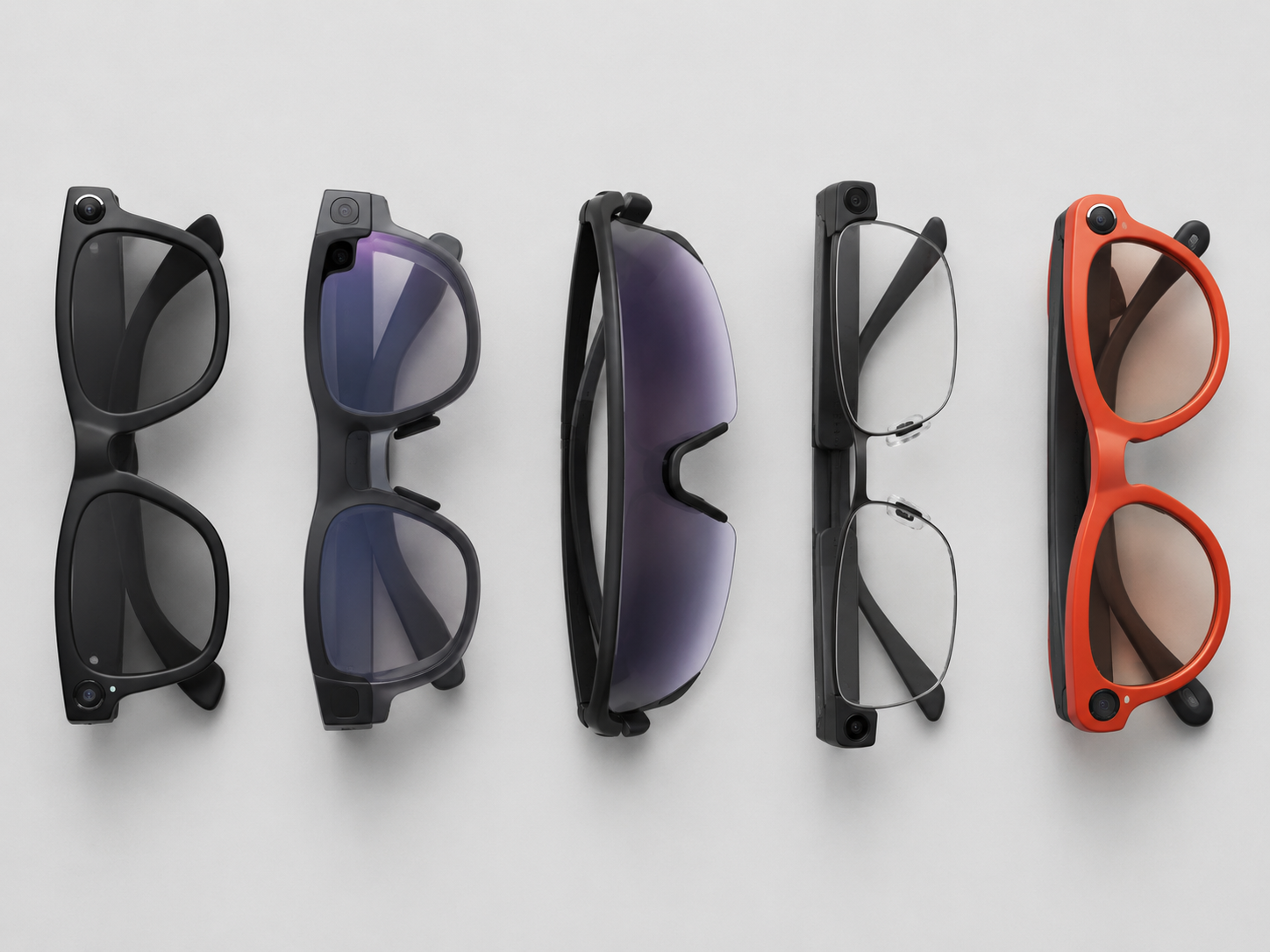
This trips up a lot of first-time buyers, so let’s clear it up directly.
AI glasses focus on voice assistants, cameras, and contextual intelligence — usually without any visual display. AR glasses add an in-lens screen that overlays digital information onto what you’re seeing, prioritizing visual experiences like virtual monitors, gaming, or media playback.
| Feature | AI Glasses | AR Glasses |
|---|---|---|
| Voice Assistant | Yes | Usually |
| Real-Time Translation | Yes | Sometimes |
| Visual Overlays | Limited | Strong |
| Productivity HUD | Moderate | High |
| Gaming / Media | Limited | Excellent |
Ray-Ban Meta sits firmly in the AI-first camp. XREAL One leans heavily AR/XR. Rokid Max splits the difference, leaning toward entertainment. The lines are blurring as companies add features in both directions, but for now this framework is still useful when you’re comparing products.
The Best AI Smart Glasses to Buy Right Now
Here’s how I’d break down the current field, especially if you’re shopping on Amazon.in:
Best AI Smart Glasses Comparison (2026)
| Product | Best For | AI Level | AR Level | Approx. Price (India) |
|---|---|---|---|---|
| Ray-Ban Meta Smart Glasses | Everyday AI use, photos, translation | ★★★★★ | ★★☆☆☆ | ₹29,990+ |
| XREAL One | AR productivity & portable monitor | ★★★☆☆ | ★★★★★ | ₹69,000 |
| VITURE Pro XR | Media & entertainment | ★★★☆☆ | ★★★★☆ | ₹35,500 |
| Rokid Max | Gaming & long display sessions | ★★★☆☆ | ★★★★☆ | ₹69,990 |
| RayNeo Air 3 | Budget-friendly AR | ★★☆☆☆ | ★★★★☆ | ₹23,600 |
Best Overall: Ray-Ban Meta Smart Glasses
If you only buy one pair and want them to actually become part of your daily routine, this is the one. They look like normal Wayfarers — nobody glances twice — and the combination of a capable AI assistant, solid 3K camera, and a mature ecosystem (Meta View app, both iOS and Android support) makes them the easiest “no learning curve” option. Gen 2 starts around ₹39,900 in India, with Gen 1 available from roughly ₹29,990.
The trade-off: there’s no visual display, so if you’re picturing a heads-up navigation overlay, this isn’t it.
Best for AR Productivity: XREAL One
For developers, remote workers, or anyone who’s tired of squinting at a laptop screen on a flight, XREAL One projects a large virtual display that can effectively give you extra monitors anywhere. It’s more of a portable workstation accessory than an everyday-wear device, and at around ₹69,000, it’s an investment — but for the right use case (long commutes, frequent travel with laptop work), it pays for itself in comfort pretty quickly.
Best for Entertainment: VITURE Pro XR Glasses
At roughly ₹35,500, these are aimed squarely at people who want a private, large-screen experience for movies, streaming, or gaming on a Steam Deck during a long flight. The display quality is genuinely impressive for the price, though again — don’t expect all-day AI assistant features here.
If you’re debating between a big-screen setup at home versus a more portable display like this, our guide to the best TV brands to buy in India in 2026 might help you decide where to put your budget.
Best for Gaming: Rokid Max
Bright displays and immersive visuals make Rokid Max a favorite for console gaming on the go, with claimed battery life up to 12 hours in certain modes. At around ₹69,990, it’s priced similarly to XREAL One but leans more toward entertainment than productivity.
Best Budget AR Option: RayNeo Air 3
If you want to try the AR display experience without committing ₹70,000, RayNeo Air 3 at around ₹23,600 is a reasonable entry point. Don’t expect flagship AI features, but for casual media consumption it punches above its price.
How People Are Actually Using These in Daily Life

It’s one thing to list specs, but the real test is what happens once you’ve had a pair for a month. From what I’ve seen and heard from users:
- Travelers lean heavily on translation and navigation — reading signs, ordering food, asking quick questions without fumbling for a translation app.
- Professionals use them for quick voice notes, reminders, and the occasional discreet meeting summary.
- Content creators love the hands-free POV capture, especially Ray-Ban Meta users documenting trips or tutorials without holding a phone up the whole time.
- Accessibility use cases are growing too — researchers increasingly frame AI glasses as assistive co-pilots for people with low vision or memory support needs — Source: arXiv research on egocentric AI assistants, 2026.
Are AI Smart Glasses Safe and Private to Use?
This is the question I get asked most, and it deserves an honest answer: mostly yes, but it depends on how you and the people around you handle them.
Most 2026 models include a visible recording indicator light that activates whenever the camera is in use — a meaningful improvement over earlier prototypes. On top of that, more AI processing is happening on-device rather than being sent to the cloud, which reduces (though doesn’t eliminate) data exposure concerns. Meta, for its part, removed certain face-recognition features from some smart-glass workflows after privacy pushback, which is worth knowing if that’s a concern for you.
That said, some environments — gyms, certain offices, courtrooms, schools — restrict camera-equipped wearables regardless of your intentions, so it’s worth checking local policies before you walk in wearing them. A few practical habits help: stick with established brands, review what permissions you’re granting in the companion app, and turn off automatic recording features you don’t actually need.
If you’re already thinking about cameras and privacy at home, it’s worth reading our guide to the best AI-powered security cameras you can buy in India — a lot of the same privacy principles (recording indicators, on-device processing, permission management) apply there too.
Can AI Smart Glasses Replace Your Phone?
Not yet, and probably not for a while. They already handle a surprising amount — messaging, calls, translation, navigation, quick searches, and photos — but they still rely on a paired phone for connectivity, heavier app usage, banking, and anything involving extended typing or video editing.
What’s more realistic is that your phone becomes the background processor while your glasses become the primary interface for quick interactions. That shift is already happening, even if it’s gradual.
What’s Coming Next?
A few trends worth keeping an eye on if you’re trying to time a purchase:
- On-device AI models that reduce reliance on cloud processing, meaning faster responses and better offline functionality.
- Brighter, wider-field-of-view displays using micro-OLED technology.
- Battery improvements, potentially through silicon-carbon battery chemistry, which could finally make all-day display use realistic.
- More agentic AI — glasses that don’t just answer questions but can actually complete multi-step tasks on your behalf. Some research already frames this as the next major leap for the category — Source: arXiv benchmarking research on AI glasses as agents, 2026.
Google’s audio-only Android XR glasses, co-designed with Warby Parker and Gentle Monster, are expected later this year, and Apple’s long-rumored entry is reportedly coming before a broader 2027 retail push. If you’re not in a rush, waiting six to twelve months could mean meaningfully better options — but if you travel often or create content regularly, the current generation already delivers real value today.
This same shift toward ambient, hands-free tech is showing up across the smart home too — if you’re curious, check out our breakdown of the best smart lighting systems for homes in India, which covers a lot of the same ‘less friction, more automation’ philosophy.
Conclusion
AI smart glasses in 2026 aren’t a gimmick anymore — they’re a practical category with real differentiation depending on what you need. If you want an everyday, low-friction AI companion that looks like normal eyewear, Ray-Ban Meta is the safe, well-supported choice. If you’re after a portable display for work or entertainment, XREAL One, VITURE Pro XR, or Rokid Max each serve slightly different needs at a higher price point, and RayNeo Air 3 is a reasonable way to dip a toe in without spending a fortune.
The bigger shift, though, isn’t really about any one device. It’s the move from screen-first computing — where you have to stop and look at something — to a more ambient model where information and assistance are simply available when you need them. AI smart glasses are one of the clearest early examples of what that actually looks like in practice.
Frequently Asked Questions
FAQ 1: Are AI smart glasses worth buying?
For most people, yes — particularly audio-first AI glasses like Ray-Ban Meta, which now offer genuine daily utility for calls, translation, and hands-free content capture. Display-first AR glasses suit a narrower audience: remote workers, frequent flyers, and gamers who want a portable screen.
FAQ 2: Can AI smart glasses replace smartphones?
Not fully in 2026. They handle quick interactions well but still depend on a paired phone for connectivity, processing power, and heavier app use.
FAQ 3: Are AI smart glasses available in India?
Yes. Ray-Ban Meta is officially available through Amazon, Flipkart, and Reliance Digital, with Gen 1 starting around ₹29,990 and Gen 2 around ₹39,900. XREAL One, Rokid Max, VITURE Pro XR, and RayNeo Air 3 are also listed on Amazon.in.
FAQ 4: Can AI glasses translate languages in real time?
Yes. Most current AI glasses, including Ray-Ban Meta, support live audio translation, with language support expanding regularly.
FAQ 5: What’s the difference between AR glasses and AI glasses?
AI glasses focus on voice assistants and cameras without a display; AR glasses add an in-lens screen that overlays digital content onto the real world, like XREAL One or Rokid Max.
FAQ 6: Are AI smart glasses safe to use?
Generally yes, especially with recording indicator lights and on-device processing now standard — but it’s worth reviewing the privacy policy of whichever AI assistant powers your specific glasses.
Written by Rohan Khanna: Rohan Khanna is a technology content writer covering consumer gadgets, digital products, wearable technology, and emerging tech trends for everyday users. His work focuses on simplifying complex technology topics and helping readers make informed purchasing decisions through clear, practical, and easy-to-understand content.
Affiliate Disclosure: This article may contain affiliate links. If you purchase a product through these links, we may earn a small commission at no additional cost to you. Our recommendations are based on independent research, product comparisons, publicly available information, and editorial evaluation. Affiliate partnerships do not influence our content, rankings, or recommendations.
Disclaimer: This article is based on product research, market analysis, manufacturer specifications, industry reports, and publicly available information regarding AI smart glasses and wearable technology. Product features, software capabilities, pricing, availability, and platform compatibility may change over time as manufacturers release updates and new models. Readers are encouraged to verify the latest specifications, supported features, privacy policies, and compatibility requirements directly with manufacturers before making a purchase decision. Any opinions expressed are intended for informational and educational purposes only and should not be considered professional technical advice. This content was initially drafted with AI assistance and has been carefully reviewed, edited, refined, and fact-checked by human editors to ensure accuracy, clarity, originality, and practical relevance for readers.