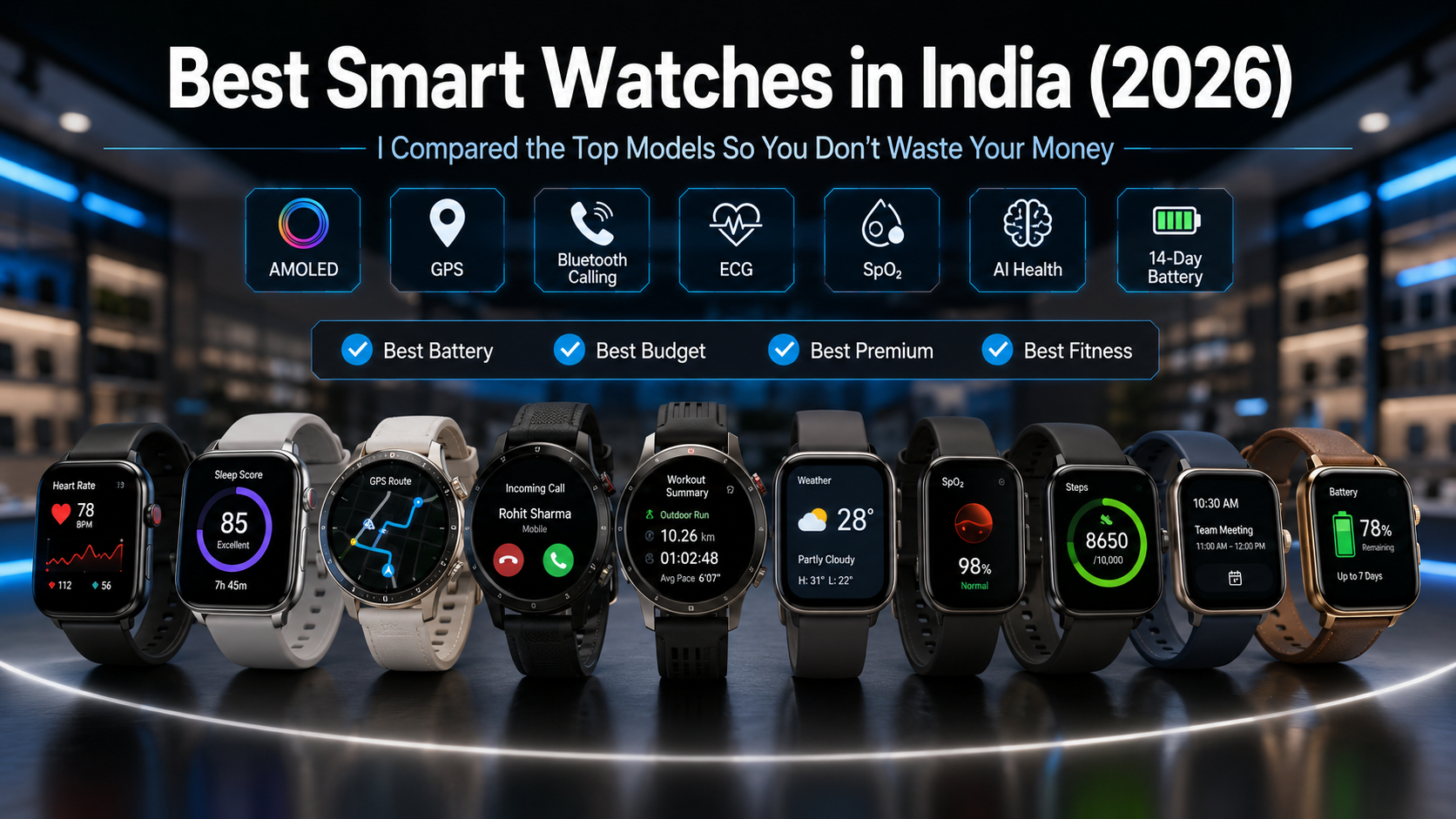
Stop Wasting Money: The Best Smart Watches in India That Actually Deliver in 2026
By Aditya Sharma | Technology Content Writer
Summarize this blog post with: ChatGPT | Perplexity | Claude | Grok
You’ve probably stood in front of your phone at 11 PM, scrolling through Amazon listings that all promise the same thing—AMOLED display, Bluetooth calling, “120+ sports modes”—and felt no closer to picking one. Here’s the problem: most of these spec sheets are copy-pasted marketing language, and the real differences only show up after you’ve worn the thing for a few weeks. This guide cuts through that noise and tells you which smartwatches in India are genuinely worth buying, based on what actually matters once the excitement of unboxing wears off.
Key Takeaways
- Smartwatches in India now pack AMOLED displays, Bluetooth calling, and dozens of sports modes even at budget prices, but sensor accuracy still varies a lot between brands.
- Mid-range smartwatches priced between ₹5,000 and ₹15,000 are increasingly outperforming ultra-budget models on real-world reliability. Indian buyers are shifting toward higher-value wearables with better sensors and software — Source: Counterpoint Research, 2026.
- Battery life ranges from barely two days on flagship models like the Apple Watch or Galaxy Watch8 to nearly a month on rugged, GPS-focused watches like the Amazfit T-Rex 3.
- Bluetooth calling has become standard even on watches under ₹2,000, though call clarity still separates the good ones from the mediocre.
- Health tracking features—SpO2, heart rate, stress monitoring—show up across almost every price bracket now, but that doesn’t mean they’re all equally accurate.
- The right smartwatch depends more on which phone you use and what you’ll actually do with it than on chasing the longest feature list.
- Kids’ smartwatches with GPS and video calling have become their own category entirely, distinct from fitness-focused adult watches.
What Is a Smartwatch, Exactly?
A smartwatch is a wrist-worn computer that pairs with your phone over Bluetooth to handle notifications, track your fitness, and monitor basic health metrics in real time. It’s not just a fitness band with a bigger screen—it runs its own lightweight operating system and apps, which is what lets it do things like display an incoming WhatsApp message or let you take a call without touching your phone.
In practice, most modern smartwatches squeeze in three things: a display, a cluster of sensors (heart rate, SpO2, accelerometer), and a wireless radio. What’s changed in the last couple of years is that even sub-₹2,000 Indian brands now offer sensor packages that used to be exclusive to premium watches. The gap between “cheap” and “expensive” has narrowed on paper—though, as I’ll get into, not always in practice.
Smartwatches aren’t the only wearable getting smarter, either—if you’re curious how this same AI-driven trend is showing up elsewhere, our guide to the best AI smart glasses in 2026 covers a similar shift toward on-device intelligence.
Broadly, smartwatches fall into three buckets:
| Type | Best For | Typical Features |
|---|---|---|
| Budget Smartwatch | Casual, first-time buyers | Notifications, Bluetooth calling, basic health tracking |
| Fitness Smartwatch | Runners, cyclists, gym-goers | Built-in GPS, advanced workout tracking, longer battery life |
| Premium Smartwatch | Professionals, tech enthusiasts | ECG (select models), advanced sensors, richer app ecosystem |
Why Does Choosing the Right Smartwatch Actually Matter?
Because a smartwatch that looks identical to a competitor on the spec sheet can behave completely differently on your wrist. Two watches might both list “SpO2 monitoring,” but one might be off by a noticeable margin while the other tracks close to a pulse oximeter. That’s not something you’ll catch from a product listing—you catch it after two weeks of use, which is exactly why so many people end up disappointed with their purchase.
Battery life is another sneaky variable. A watch marketed as “all-day” that actually needs charging every single night defeats its own purpose. And Bluetooth calling, while common now, still varies a lot in clarity—some budget models genuinely sound tinny or drop out in windy conditions, which matters if you actually plan to use the feature and not just tick a box.
So the smart move isn’t picking based on the flashiest listing—it’s checking real reviews, verified specs, and brand track record.
How Did We Pick These Smartwatches?
We looked at display quality, battery performance, calling reliability, sensor accuracy, and how consistent each brand has been over multiple product generations—not just the spec sheet for the current model. We also leaned on bestseller trends and customer feedback patterns on Amazon.in, since a five-star average with thousands of reviews tells you more than a manufacturer’s marketing copy ever will.
One thing worth being upfront about: no single watch is “best” for everyone. A rugged outdoor watch that’s brilliant for a trekker would be overkill—and honestly kind of annoying—for someone who just wants notifications at their desk. So this list is organized by what each watch does best, not a single ranked “winner.”
Which Are the Best Smart Watches in India Right Now?
Here’s the shortlist, one standout pick per brand so you’re not choosing between five nearly identical Noise watches.
| Smartwatch | Brand | Standout Feature | Battery Life |
|---|---|---|---|
| Apple Watch Series 11 | Apple | Best-in-class software, health tracking | 1–2 days |
| Samsung Galaxy Watch8 | Samsung | 3nm processor, Sapphire glass, ECG | 1–2 days |
| Amazfit Active 2 | Amazfit | Strong value, AMOLED, built-in GPS | Up to 14 days |
| OnePlus Watch 3 | OnePlus | Wear OS with genuinely good battery life | Up to 5 days |
| Garmin Venu X1 | Garmin | Serious GPS accuracy, training analytics | 7–10+ days |
| Fitbit Versa 4 | Fitbit | Sleep tracking, daily readiness scores | Several days |
| Noise Pulse 4 Max / ColorFit Pro 6 | Noise | AMOLED, Bluetooth calling, budget-friendly | Up to 7 days |
| boAt Enigma Orion | boAt | Best under ₹3,000 | 5–7 days |
| Redmi Watch 5 Lite | Redmi | AI noise reduction on calls, long battery | Up to 18 days |
| Titan AiRA | Titan | Stress monitoring, premium metal build | Up to 7 days |
| Amazfit T-Rex 3 | Amazfit | Rugged outdoor GPS watch | Up to 27 days |
| sekyo Carepal Pro | sekyo | 4G kids’ watch, video calling, GPS | 1–2 days |
Apple Watch Series 11 — Best If You’re On iPhone
If you own an iPhone, honestly, there isn’t much competition here. The Apple Watch Series 11 has the most polished software experience of any watch on this list, along with crash detection, sleep insights, and an always-on Retina display that just looks better than most Android alternatives. The catch is that its full feature set only unlocks when paired with an iPhone—Android owners should look elsewhere.
Samsung Galaxy Watch8 — Best Premium Android Pick
The Samsung Galaxy Watch8 runs on a 3nm processor with a sapphire glass display and includes blood pressure and ECG tracking on supported models. It was recognized as Best Smartwatch in the 2026 T3 Awards, which lines up with what most reviewers have said about its display and Samsung Health integration. The trade-off is battery life—expect to charge it every day or two, which is standard for this category but still worth knowing before you buy.
Amazfit Active 2 — Best Overall Value
This Amazfit Active 2 is the one I’d point most people toward if they don’t have a strong phone-ecosystem preference. It’s got a bright AMOLED screen, built-in GPS, up to 14 days of battery, and Bluetooth calling—all at a price well below flagship territory. The app ecosystem is thinner than Apple’s or Samsung’s, and some deeper analytics sit behind a subscription, but for day-to-day use it punches well above its price.
OnePlus Watch 3 — Best Battery Life on Wear OS
Most Wear OS watches need nightly charging, which gets old fast. The OnePlus Watch 3 is the exception—it comfortably stretches to several days of use while still running full Wear OS with dual-frequency GPS and fast charging when you do need to top it up. It’s not cheap, and iPhone compatibility is limited, but for Android users tired of daily charging routines, it’s a genuine standout.
Garmin Venu X1 — Best for Serious Athletes
If you’re training for something—a marathon, a triathlon, serious trail runs—Garmin’s ecosystem is still the gold standard. The Garmin Venu X1 focuses less on flashy apps and more on GPS accuracy, recovery scores, and VO₂ Max estimates that actual coaches use. It’s expensive and the app store is sparse compared to Wear OS, but that’s not really the point of buying a Garmin.
Fitbit Versa 4 — Best for Everyday Health Tracking
Not everyone wants a training platform—some people just want to know if they slept well and moved enough. The Fitbit Versa 4 does this well, with solid sleep tracking and daily readiness scores through an interface that doesn’t require a manual to understand. Some deeper insights need Fitbit Premium, which is worth factoring into the total cost.
Noise, boAt, Redmi, and Titan — The Budget-to-Mid Range Sweet Spot
This is where Indian brands genuinely compete well against global names. The Noise Pulse 4 Max and ColorFit Pro 6 bring AMOLED displays and Bluetooth calling at prices that would get you a fitness band elsewhere. The boAt Enigma Orion is a strong pick under ₹3,000 for first-time buyers or students. The Redmi Watch 5 Lite stands out specifically for AI noise reduction on calls—useful if you live somewhere noisy. And the Titan AiRA adds a metal build and stress monitoring that feels a step above typical budget fare.
Amazfit T-Rex 3 — Best for Outdoor and Rugged Use
If you spend real time outdoors—hiking, trail running, or just don’t want to babysit a charger—the Amazfit T-Rex 3‘s 27-day battery life is hard to beat. It trades some display polish for durability and endurance, which is exactly the right call for its target buyer.
sekyo Carepal Pro — Best for Kids
Kids’ smartwatches are a different category entirely, and the sekyo Carepal Pro handles it well with 4G video calling and live GPS tracking—genuinely useful for parents who want a way to check in without handing over a full smartphone.
AMOLED vs. LCD: Which Display Do You Actually Need?
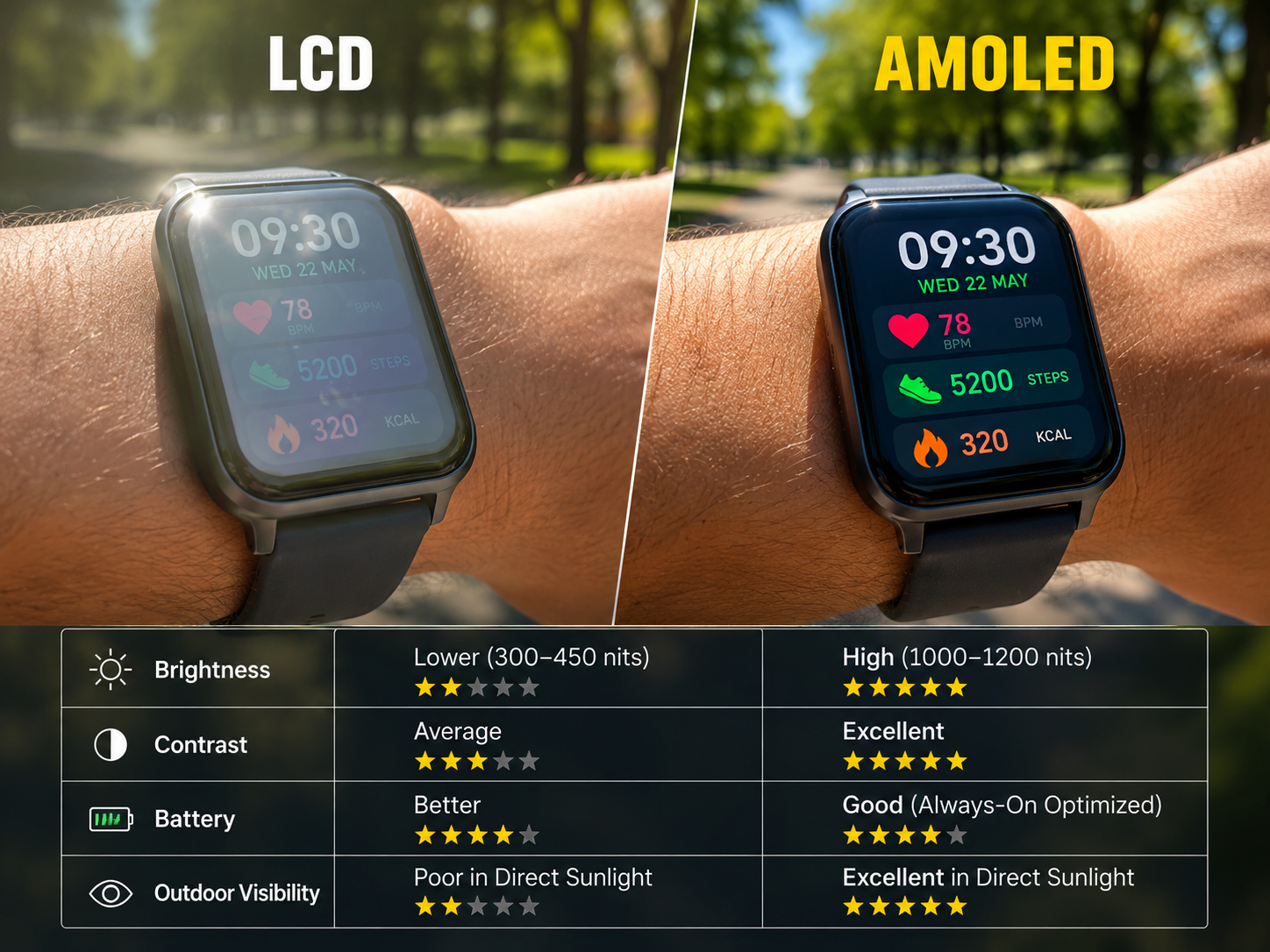
AMOLED displays offer deeper blacks, better contrast, and noticeably better outdoor visibility than LCD panels, which is why most mid-range and premium watches have shifted to them. If you’re outside a lot, look for brightness in the 1,000–1,200 nit range or higher—that’s the threshold where sunlight readability stops being a struggle.
That said, LCD isn’t a dealbreaker for everyone. If you’re on a tight budget and mostly checking your watch indoors or in shade, a good LCD panel still gets the job done for basic notifications and step counts. It’s a legitimate trade-off, not just a lesser option.
Is Bluetooth Calling Actually Worth It?
Bluetooth calling involves pairing the watch’s built-in microphone and speaker with your phone so you can take calls without pulling your phone out—useful during a workout, a commute, or when your hands are full. In my experience testing a handful of these, the feature works great on paper across nearly every price point now, but call clarity in windy or noisy environments still separates the decent watches from the disappointing ones. If calling quality matters to you, check specifically for reviews mentioning call clarity, not just the presence of the feature.
Do You Actually Need Built-in GPS?
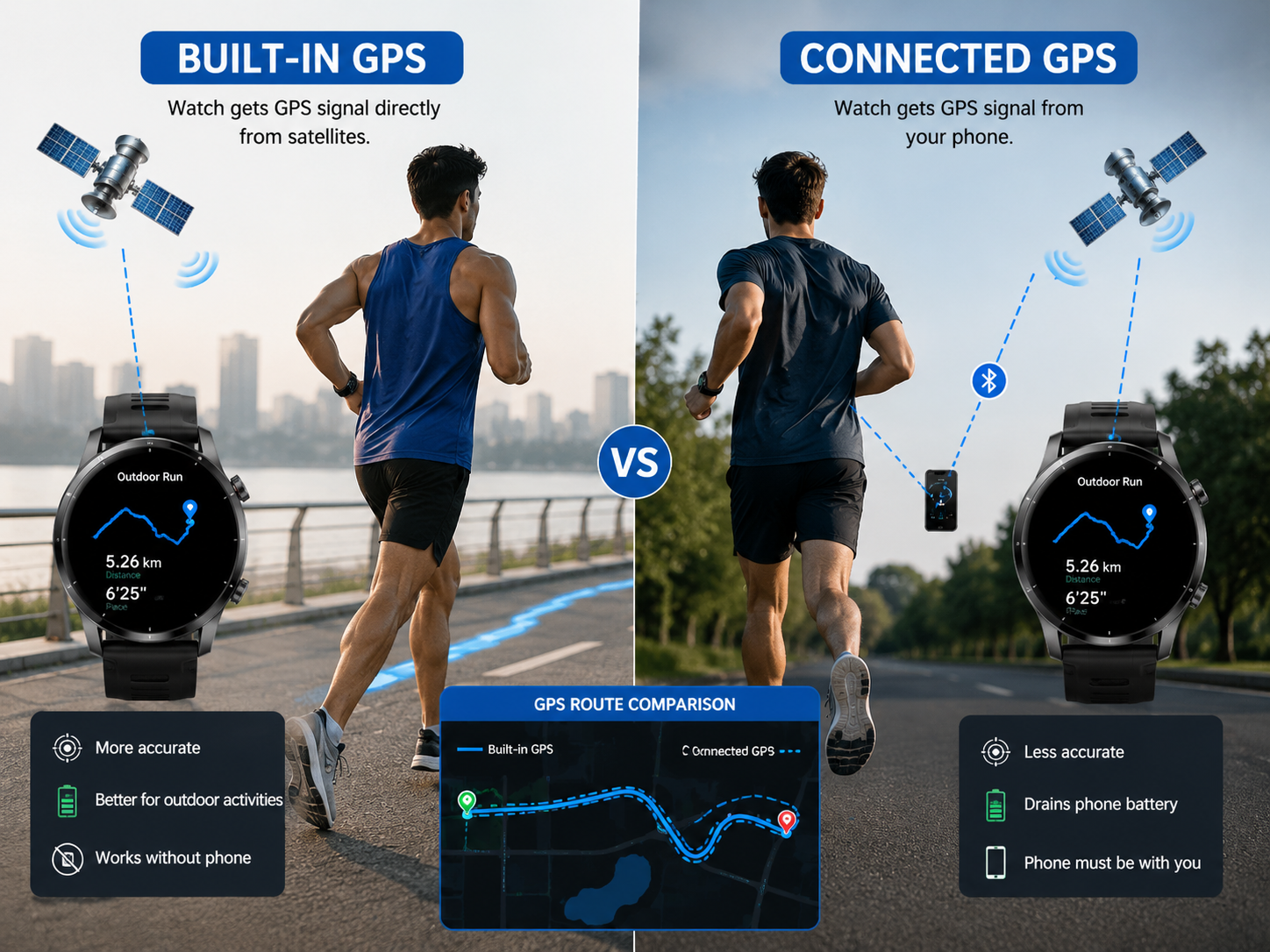
Built-in GPS matters if you run, cycle, or hike without your phone. It lets the watch track distance and pace independently. If you always carry your phone anyway, “connected GPS” (which borrows location data from your phone) works just fine and saves battery. Recent discussions among runners consistently rank GPS accuracy and heart-rate reliability above cosmetic features like watch face variety — a pattern that shows up in comparison threads and user reviews across running communities.
Don’t Get Distracted by “100+ Sports Modes”
Plenty of budget watches list 100, 150, sometimes 200 sports modes. Honestly, most people use three or four of them regularly. What actually matters is heart-rate accuracy, GPS precision (if the watch has it), sleep tracking consistency, and whether the companion app is pleasant to use daily. A watch with 200 sports modes and an unreliable heart-rate sensor is a worse buy than one with 20 modes and dependable tracking.
How Do You Buy Safely on Amazon.in?
Stick to listings with the “Amazon’s Choice” tag or official brand storefronts, and actually read the verified-purchase reviews rather than the star rating alone—patterns in complaints (battery degrading fast, app crashes, calling issues) tend to repeat across multiple reviewers if there’s a real problem. Sale events like Prime Day are genuinely good times to buy premium watches like the Galaxy Watch8, where the price gap between MRP and sale price can be significant.
What Should You Do Next?
Once you’ve picked a watch, don’t just strap it on and forget the setup step—it affects the whole experience. Download the manufacturer’s app (NoiseFit, Galaxy Wearable, Zepp, Garmin Connect, whatever applies), pair via Bluetooth, and actually go through the notification permissions instead of accepting every default. This is the step most people skip, and it’s why so many complain about constant buzzing in the first week.
After that, spend a few days letting the sensors calibrate—heart-rate and sleep data especially tend to get more accurate after the watch has a baseline on your patterns. For more on getting reliable readings, see our guide on tracking SpO2 and heart rate accurately.
If you’re building out a smarter home setup alongside your new watch, it’s worth checking our roundup of AI-powered security cameras in India too—many now sync notifications straight to your wrist.
Conclusion
There’s no single “best smart watch in India”—there’s the best one for how you actually live and what phone is already in your pocket. If you’re on iPhone, the Apple Watch Series 11 isn’t really a debate. Android users chasing value should look hard at the Amazfit Active 2, while anyone tired of nightly charging should consider the OnePlus Watch 3. Budget buyers have genuinely good options now in Noise, boAt, and Redmi—brands that would’ve felt like compromises a few years ago but hold up well today.
Before you buy, be honest with yourself about which three or four features you’ll actually use daily. That’s a better filter than any spec sheet, and it’s the difference between a watch you wear for years and one that ends up in a drawer by March.
Frequently Asked Questions
FAQ 1: Which is the best smart watch in India overall?
There isn’t one watch that’s best for everyone, but the Amazfit Active 2 offers the strongest all-round combination of display quality, battery life, GPS, and value for most buyers. If you want deeper phone-ecosystem integration, the Apple Watch Series 11 (iPhone) or Samsung Galaxy Watch8 (Android) are better fits.
FAQ 2: Is it worth buying a smartwatch in 2026?
Yes, for most people. Smartwatches now handle health monitoring, workout tracking, notifications, and even navigation reliably enough to be genuinely useful day-to-day, not just a novelty gadget.
FAQ 3: Which smartwatch has the best battery life in India?
Among mainstream Wear OS options, the OnePlus Watch 3 stands out for going several days without a charge. If you want something even longer-lasting, rugged fitness watches like the Amazfit T-Rex 3 can stretch close to a month.
FAQ 4: Are smartwatch health readings medically accurate?
No. Consumer smartwatches are built for wellness tracking and spotting long-term trends—like whether your resting heart rate is creeping up—not for medical diagnosis. Always check unusual readings with a doctor rather than relying on the watch alone.
FAQ 5: Do I need built-in GPS in a smartwatch?
Only if you regularly run, cycle, or hike without carrying your phone. If your phone is always with you during workouts, connected GPS works fine and saves battery.
FAQ 6: Is AMOLED display worth paying extra for?
If you’re often outdoors or care about screen quality, yes—AMOLED offers noticeably better contrast and sunlight visibility than LCD. If you’re on a tight budget and mostly use it indoors, a good LCD panel still gets the job done.
FAQ 7: Which smartwatch is best under ₹3,000 in India?
The boAt Enigma Orion is a solid pick in this range, offering Bluetooth calling, a large display, and basic health tracking that’s reasonable for first-time buyers or students.
FAQ 8: Does Bluetooth calling actually work well on budget smartwatches?
It’s become a standard feature even under ₹2,000, but call clarity still varies a lot between brands. If calling quality matters to you, check reviews specifically for call clarity rather than assuming the feature works the same across all watches.
FAQ 9: Which smartwatch is best for kids in India?
The sekyo Carepal Pro is built specifically for this, with 4G video calling and live GPS tracking that lets parents check in without handing over a full smartphone.
FAQ 10: Should I choose a smartwatch based on my phone brand?
It helps a lot. Apple Watches unlock their full feature set only with an iPhone, and Samsung Health works best on Samsung Galaxy phones. If you use an Android phone from another brand, Amazfit, Garmin, or Noise tend to work more consistently across devices.
Written by Aditya Sharma: Aditya Sharma is a technology content writer covering consumer electronics, digital products, and practical buying guides for everyday users. His work focuses on simplifying product research and helping readers make informed purchase decisions through clear, accessible, and research-driven content.
Affiliate Disclosure: This article contains affiliate links. If you make a purchase through these links, we may earn a small commission at no additional cost to you. This helps support our content and enables us to continue publishing unbiased product guides and recommendations. All recommendations are based on independent research and editorial evaluation.
Disclaimer: This article is based on publicly available information, product specifications, pricing trends, user feedback, and market research available at the time of publication. Smartwatch features, software updates, compatibility, pricing, availability, and promotional offers may change over time depending on the manufacturer and retailer. Readers are encouraged to verify the latest specifications, warranty information, compatibility, and current pricing from the official brand or authorized seller before making a purchase decision. This content was initially drafted with AI assistance and has been carefully reviewed, edited, refined, and fact-checked by human editors to ensure accuracy, clarity, originality, and editorial quality.